International medical graduates often ask me about my decision to come to the US, so I’d like to share why I chose to pursue a medical career in the United States. This decision profoundly shaped my professional and personal life.
I will write first about why I wanted to come to the US before coming to residency. A follow-up blog will come up about what I think the benefits of coming to the US after living here for 8 years.
Pursuing the Physician-Scientist Dream
My primary motivation was my aspiration to become a physician-scientist. During medical school in South Korea, a summer research experience in a wet lab captivated me (with Dr. Sunghyouk Park)—formulating a hypothesis, designing experiments, analyzing data, and publishing findings showed me the powerful intersection of medicine and scientific discovery.
The United States uniquely offers support for physician-scientists, robust research infrastructure, prestigious academic institutions, and ample funding opportunities (recalling what I thought at that time was a good reason). I just thought that the US provided the opportunity to pursue my dream.
The Appeal of Practicing Medicine in the U.S.
There are many different appeal to practicing medicine in the US. I recognized these benefits during my clinical clerkship at the University of Southern California in my sixth year of medical school, I was struck by the genuine happiness of the physicians. This was in contrast to many Korean physicians who were burnt out and tired all the time.
I noticed physicians deeply enjoying their interactions with patients, mutual respect between patients and physicians, and a strong collegiality among colleagues. The supportive environment were remarkably attractive to me.
This is why I strongly recommend medical students from South Korea (and world-wide) to undertake clinical rotations in the U.S, if possible. These experiences provide invaluable insights into American healthcare and culture that simply can’t be understood from just reading/ seeing.
Personal Connection to America
I spent parts of my childhood and teenage years in New Jersey (1999-2001) filled with warm, happy memories and friendships. This early exposure created a sense of familiarity and comfort that influenced my decision to return later in life.
Family and Quality of Life- ie Work-Life Balance
Although unmarried at the time of my decision, I considered long-term implications for my future family. The educational and professional opportunities for my future children, combined with a better work-life balance for physicians compared to the demanding (aka impossible) schedules often seen in South Korea, made the U.S. an attractive place for both career and family life.
Recognizing the Challenges
Of course, choosing to relocate internationally comes with significant trade-offs, including separation from family, lifelong friends, and familiar cultural environments. These sacrifices should not be understated. Also, LANGUAGE, CULTURAL BARRIERS
However, residency programs where international medical graduates commonly match often exist within culturally diverse communities (NYC, Chicago etc.). Here, you’ll find peers who have walked similar paths, and senior colleagues who are international graduates themselves. These individuals will become invaluable support networks and lifelong friends.
While cultural differences exist, they aren’t prohibitive to coming to the US—especially within the richly diverse medical communities throughout the United States. You’ll often find people from your own cultural background to ease your transition and provide mentorship.
Final Thoughts
Choosing to practice medicine and pursue research in the United States is deeply personal decision. I cannot recommend everyone to come to the US (despite the current political challenges in Korea). For me, the professional opportunities, supportive medical culture, personal connection, and family-friendly environment outweighed the challenges associated with relocation and cultural adjustment.
If you’re considering a similar path, I encourage you to gain firsthand experience within the U.S. healthcare system through clinical rotations. These experiences can provide clarity and help you determine if this journey aligns with your career aspirations.
Do I regret coming to the US, after 8 years? Not at all. Coming to the US changed my life. I finished training, got an amazing job/ working opportunities, married happily with two beautiful children, supportive friends and colleagues. I do miss my parents, grandparents, friends, Korean food. However, I cannot imagine myself going back to South Korea to live/ work.
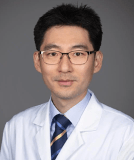
 Dr. Daehyun Lee Blog